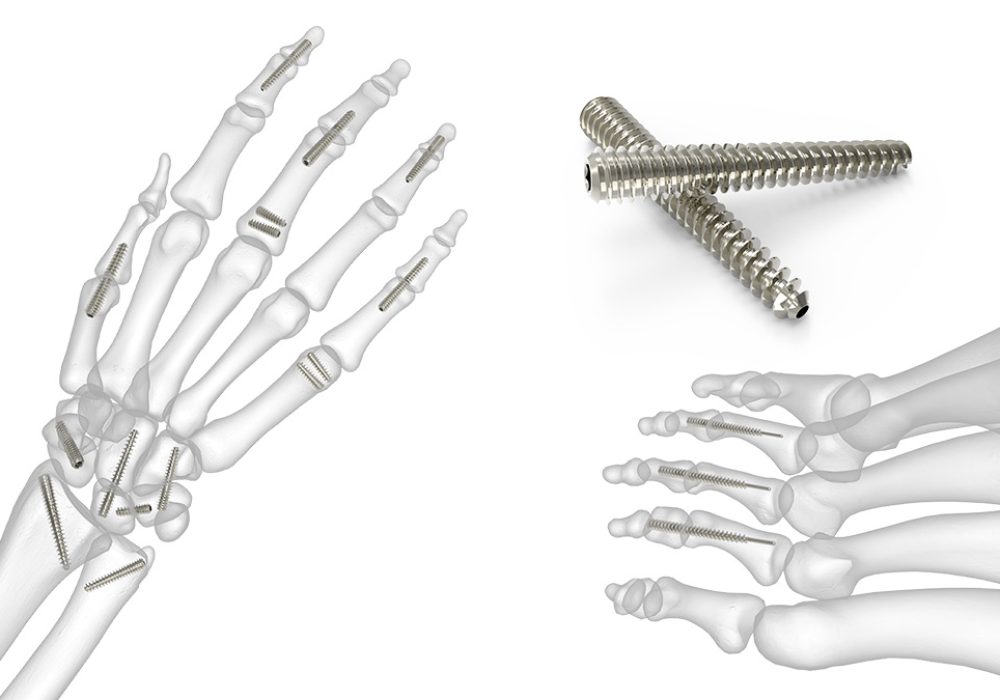
Headless screw fixation of the carpus represents a significant advancement in the surgical management of carpal bone fractures and instability. This technique utilizes specialized screws designed to provide stable internal fixation while minimizing soft tissue irritation and preserving joint function. The carpus, composed of eight small bones arranged in two rows, plays a crucial role in wrist mobility and load transmission. Injuries to these bones, whether from trauma or degenerative conditions, often require precise and stable fixation to restore anatomy and function. Headless screws have become a preferred option due to their unique design and biomechanical advantages.
Understanding the anatomy of the carpus is essential for effective fixation. The carpal bones include the scaphoid, lunate, triquetrum, pisiform, trapezium, trapezoid, capitate, and hamate. These bones form complex articulations that allow for the wrist’s wide range of motion, including flexion, extension, radial and ulnar deviation, and circumduction. The carpal bones are stabilized by a network of ligaments, and their blood supply is often tenuous, especially in the scaphoid, making fractures prone to nonunion or avascular necrosis.
The biomechanical environment of the carpus involves significant compressive and shear forces during wrist movement and load bearing. Therefore, fixation devices must provide sufficient stability to withstand these forces while allowing early mobilization to prevent stiffness and promote healing.
Headless screws are designed to be fully embedded within the bone, eliminating the protruding screw head that can irritate surrounding soft tissues or interfere with joint movement. These screws typically have a variable pitch thread, which allows for compression across the fracture site as the screw is advanced. The compression promotes bone healing by reducing micromotion and enhancing stability.
The screws are made from biocompatible materials such as titanium or stainless steel, which provide strength and resistance to corrosion. Their design often includes a tapered tip for easier insertion and self-tapping threads to reduce the need for pre-drilling in some cases.
Headless screw fixation is primarily indicated for fractures of the carpal bones that require stable internal fixation. Common indications include:
The surgical approach depends on the specific carpal bone involved and the fracture pattern. Generally, the procedure involves the following steps:
Clinical studies have demonstrated favorable outcomes with headless screw fixation in carpal fractures, particularly in scaphoid fractures where union rates exceed 90% in many series. Patients typically experience reduced pain, improved grip strength, and restoration of wrist function.
However, complications can occur, including:
Postoperative management involves immobilization in a splint or cast for a variable period depending on fracture stability and healing progress. Early controlled mobilization is encouraged once sufficient healing is evident to prevent joint stiffness and muscle atrophy.
Physical therapy focuses on restoring range of motion, strength, and function. Regular follow-up with imaging ensures fracture healing and hardware integrity.
Advances in imaging, surgical techniques, and implant design continue to improve outcomes in headless screw fixation of the carpus. Navigation systems and 3D printing assist in preoperative planning and custom implant design. Biodegradable screws and bioactive coatings are under investigation to enhance healing and reduce the need for hardware removal.
Minimally invasive approaches and arthroscopic-assisted fixation are gaining popularity, offering reduced soft tissue disruption and faster recovery.
Headless screw fixation of the carpus is a reliable and effective method for managing carpal fractures and instability. Its biomechanical advantages, combined with minimally invasive techniques, allow for stable fixation, early mobilization, and excellent functional recovery. Surgeons must carefully select patients and employ meticulous surgical technique to optimize outcomes and minimize complications. As technology evolves, headless screw fixation will likely remain a cornerstone in the treatment of complex carpal injuries.
Headless screw fixation of the carpus is an innovative and increasingly preferred technique for the treatment of carpal bone fractures and related wrist injuries. This method offers several biomechanical and clinical advantages over traditional fixation methods, providing stable internal fixation while minimizing soft tissue irritation and preserving wrist function. Below is a comprehensive overview of headless screw fixation of the carpus, covering anatomy, surgical principles, indications, technique, outcomes, and future directions.
Chat With Me