De Quervain’s tenosynovitis is a painful condition affecting the tendons on the thumb side of the wrist. It is characterized by inflammation of the sheath (the synovium) that surrounds two tendons responsible for thumb movement: the abductor pollicis longus (APL) and the extensor pollicis brevis (EPB). This inflammation leads to pain, swelling, and difficulty moving the thumb and wrist, significantly impacting daily activities.
De Quervain’s tenosynovitis is a type of repetitive strain injury that causes irritation and swelling of the tendon sheath. The tendons affected run through a narrow tunnel on the thumb side of the wrist. When the sheath becomes inflamed, it restricts the smooth gliding of the tendons, causing pain and discomfort.
This condition is often seen in individuals who perform repetitive hand or wrist movements, such as typing, gardening, playing musical instruments, or lifting infants. It is also common in new mothers, sometimes called “mommy thumb,” due to the frequent lifting and carrying of babies.
Diagnosis of De Quervain’s tenosynovitis is primarily clinical. A healthcare provider will take a detailed history and perform a physical examination. One common test is the Finkelstein test, where the patient makes a fist with the thumb tucked inside the fingers and then bends the wrist toward the little finger. If this maneuver causes pain on the thumb side of the wrist, it suggests De Quervain’s tenosynovitis.
Imaging studies such as ultrasound or MRI are not routinely required but may be used in atypical cases or to rule out other conditions.
Most cases of De Quervain’s tenosynovitis respond well to conservative treatment, especially when diagnosed early. These treatments include:
Surgery, known as De Quervain’s tenosynovitis release, is considered when conservative treatments fail to relieve symptoms after several weeks or months. Persistent pain, functional impairment, or recurrence despite non-surgical management may indicate the need for surgical intervention.
De Quervain’s tenosynovitis release is a minimally invasive surgical procedure aimed at relieving pressure on the inflamed tendons by releasing the tight sheath that surrounds them. The goal is to create more space for the tendons to glide smoothly, thereby reducing pain and restoring thumb and wrist function.
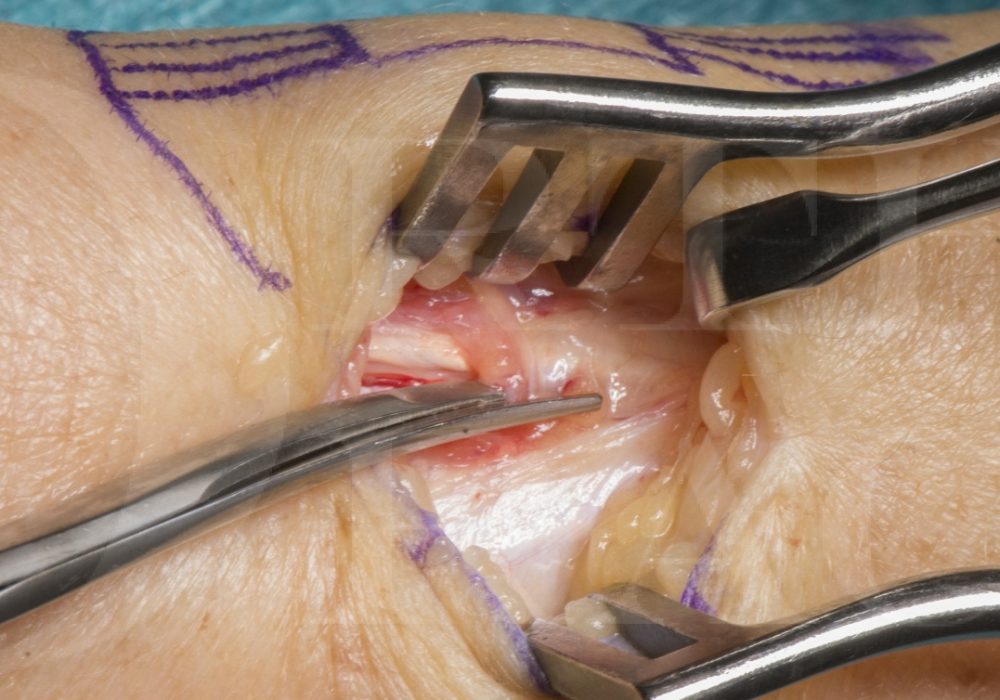
The surgery is typically performed under local anesthesia with or without sedation, allowing the patient to go home the same day. The surgeon makes a small incision over the thumb side of the wrist to access the first dorsal compartment, where the APL and EPB tendons run.
The tight fibrous sheath is carefully incised to release the constriction. Care is taken to avoid injury to the nearby superficial radial nerve, which provides sensation to the back of the hand. Once the sheath is released, the incision is closed with sutures.
The procedure usually takes less than 30 minutes and has a high success rate with minimal complications.
After surgery, the wrist and thumb may be immobilized in a splint for a short period, typically a few days to a week, to allow initial healing. Patients are encouraged to begin gentle range-of-motion exercises soon after to prevent stiffness.
Pain and swelling usually improve rapidly after surgery. Most patients can return to normal activities within 4 to 6 weeks, although heavy lifting or strenuous activities may need to be avoided for longer.
Physical therapy may be recommended to optimize recovery, improve strength, and restore full function.
As with any surgical procedure, De Quervain’s tenosynovitis release carries some risks, although serious complications are rare. Potential risks include:
The prognosis after De Quervain’s tenosynovitis release surgery is generally excellent. Most patients experience significant pain relief and improved thumb and wrist function. Recurrence of symptoms is uncommon after a successful release.
Early diagnosis and treatment are key to preventing chronic pain and disability. If you experience persistent pain on the thumb side of your wrist, consult a healthcare professional promptly.
De Quervain’s tenosynovitis can significantly impact hand function and quality of life, but effective treatments are available. When conservative measures fail, De Quervain’s tenosynovitis release surgery offers a safe and effective solution to relieve pain and restore function.
If you are experiencing persistent thumb and wrist pain, early evaluation and treatment can prevent long-term complications. Consult a qualified hand specialist to discuss your symptoms and explore the best treatment options tailored to your needs.
Chat With Me