A traumatic amputation occurs when a limb or part of a limb is forcibly detached from the body due to an external injury. Unlike surgical amputations, which are planned and controlled, traumatic amputations happen suddenly and often under violent circumstances such as industrial accidents, motor vehicle collisions, explosions, or natural disasters.
Traumatic amputations can involve any part of the upper or lower limbs, including fingers, hands, arms, toes, feet, or legs. The extent of tissue damage varies widely, from clean cuts to severe crush injuries with extensive soft tissue loss.
Causes and Mechanisms
Common causes of traumatic amputations include:
- Industrial and workplace accidents: involving heavy machinery, saws, or presses.
- Motor vehicle accidents: where limbs may be caught or crushed.
- Agricultural injuries: from equipment like tractors or harvesters.
- Explosions and blasts: causing high-energy trauma.
- Natural disasters: such as earthquakes or tornadoes.
- Violence: including gunshot wounds or assaults.
The mechanism of injury often involves a combination of cutting, crushing, and tearing forces, which can severely damage bones, muscles, nerves, blood vessels, and skin.
Types of Traumatic Amputations
Traumatic amputations can be classified based on the nature of the injury:
- Sharp amputations: caused by clean cuts, often with less tissue damage.
- Crush amputations: involving severe crushing and tissue destruction.
- Avulsion amputations: where the limb is forcibly torn away.
- Partial amputations: where some tissue connections remain.
- Complete amputations: where the limb is fully detached.
Clinical Presentation
Patients with traumatic amputations typically present with:
- Visible loss of a limb or part of a limb.
- Severe bleeding from the injury site.
- Intense pain or, in some cases, numbness if nerves are severed.
- Shock symptoms such as pale skin, rapid heartbeat, and low blood pressure.
- Possible contamination of the wound with dirt or debris.
Initial Assessment and Emergency Management
Traumatic amputations are medical emergencies requiring immediate attention. The primary goals are to control bleeding, prevent infection, and stabilize the patient.
Initial Steps Include:
- Ensure airway, breathing, and circulation (ABCs): Stabilize vital signs.
- Control hemorrhage: Apply direct pressure, use tourniquets if necessary.
- Prevent contamination: Cover the wound with sterile dressings.
- Preserve the amputated part: If available, wrap it in moist sterile gauze, place it in a sealed plastic bag, and keep it cool (not frozen).
- Pain management: Administer analgesics.
- Tetanus prophylaxis: Update immunization status.
- Transport: Rapid transfer to a trauma center or specialized facility.
Diagnostic Evaluation
Once stabilized, further evaluation includes:
Treatment Options
Surgical Management
The treatment of traumatic amputations depends on the injury severity, patient condition, and available resources. Surgical options include:
- Debridement: Removal of dead or contaminated tissue to prevent infection.
- Hemostasis: Control of bleeding vessels.
- Replantation: Microsurgical reattachment of the amputated part, possible in selected cases with clean-cut injuries and viable tissue.
- Revision amputation: Creating a clean, functional stump if replantation is not feasible.
- Soft tissue coverage: Using skin grafts or flaps to cover the stump.
- Bone stabilization: Using internal or external fixation devices.
Replantation Considerations
Replantation is a complex procedure requiring microsurgical expertise. Factors influencing success include:
- Time elapsed since injury (ideally within 6-12 hours).
- Condition of the amputated part.
- Patient’s overall health.
- Level and type of amputation
Rehabilitation and Prosthetics
Rehabilitation is essential for functional recovery and psychological adjustment. It includes:
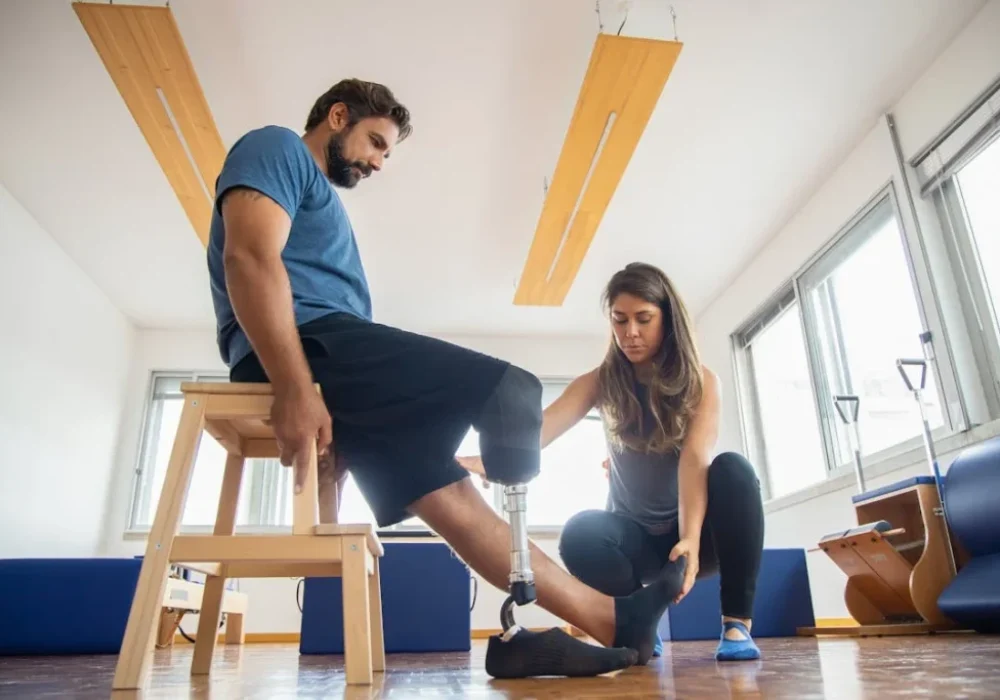
- Physical therapy: To maintain strength and range of motion in the residual limb.
- Desensitization techniques: To reduce stump sensitivity.
- Prosthetic fitting: Modern prostheses can restore appearance and function, ranging from cosmetic devices to advanced myoelectric limbs.
- Occupational therapy: To help patients adapt to daily activities and regain independence.
- Psychological support: Addressing grief, depression, and body image issues.
Complications
Potential complications of traumatic amputations include:
- Infection and wound healing problems.
- Phantom limb pain and sensations.
- Stump neuromas causing pain.
- Contractures and limited mobility.
- Psychological distress and post-traumatic stress disorder (PTSD)
Prevention
Preventing traumatic amputations involves:
- Strict adherence to safety protocols in workplaces.
- Use of protective equipment such as gloves and guards.
- Proper training and supervision when operating machinery.
- Public awareness campaigns on injury prevention.
- Legislation and enforcement of occupational safety standards.
Prognosis
The prognosis after a traumatic amputation depends on multiple factors including the injury severity, timeliness of treatment, and rehabilitation quality. While some patients achieve excellent functional outcomes, others may face permanent disability. Advances in microsurgery, prosthetics, and rehabilitation have significantly improved the quality of life for amputees.
Conclusion
Traumatic amputations are devastating injuries that require urgent and comprehensive care. Early intervention, surgical expertise, and multidisciplinary rehabilitation are key to maximizing recovery and helping patients regain independence. With ongoing advances in medical technology and support services, individuals affected by traumatic amputations can lead fulfilling lives.