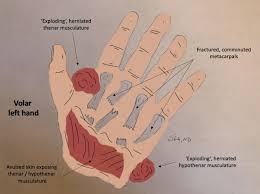
The human hand is an intricate and highly functional structure, essential for performing a wide range of daily activities, from simple tasks like writing and eating to complex actions such as playing musical instruments or performing surgery. When the hand suffers severe trauma, such as crushing or mangling injuries, the consequences can be devastating, affecting not only the physical appearance but also the functional capabilities of the hand. Crushed and mangled hand injuries require specialized reconstructive surgery to restore as much function and form as possible.
Crushed and mangled hand injuries typically result from high-energy trauma, such as industrial accidents, motor vehicle collisions, heavy machinery accidents, or severe falls. These injuries involve extensive damage to multiple tissues, including bones, tendons, muscles, nerves, blood vessels, and skin. The severity of the injury can range from simple fractures and soft tissue lacerations to complex open fractures with bone loss, tendon ruptures, nerve transections, and vascular compromise.
rush Injuries: These occur when the hand is compressed between two heavy objects, causing damage to the soft tissues and bones. The crushing force can lead to compartment syndrome, where swelling increases pressure within the hand compartments, potentially causing tissue death.
Mangled Hand Injuries: These are more severe and involve multiple tissue layers being torn, crushed, or avulsed (torn away). Mangled injuries often result in partial or complete amputation of fingers or parts of the hand.
Reconstructing a crushed or mangled hand is one of the most challenging tasks in reconstructive surgery. The surgeon must address multiple damaged structures simultaneously to restore hand function. The goals of reconstruction include:
The first step in managing a crushed or mangled hand is a thorough clinical assessment. This includes evaluating the extent of injury, checking for vascular status (blood flow), assessing nerve function, and identifying any associated injuries. Imaging studies such as X-rays, CT scans, or MRI may be used to evaluate bone and soft tissue damage.
Reconstruction of a crushed or mangled hand often requires multiple staged surgeries. The approach depends on the injury’s severity, the patient’s overall health, and the surgeon’s expertise.
Postoperative rehabilitation is critical for optimal recovery. This includes:
Recovery can take months to years, and the final functional outcome depends on the injury severity and the quality of reconstruction and rehabilitation.
Severe hand injuries can have profound psychological effects, including anxiety, depression, and loss of self-esteem due to altered appearance and function. Psychological support and counseling are important components of comprehensive care.
Recent advances have improved outcomes for patients with severe hand injuries:
In some cases, despite best efforts, the hand or parts of it cannot be salvaged due to extensive damage or infection. Amputation may be necessary to save the patient’s life or improve overall function with a prosthesis. Modern prosthetic hands offer remarkable functionality and can be integrated with the nervous system for intuitive control.
Crushed and mangled hand injuries are devastating but with advances in surgical techniques and rehabilitation, many patients can regain significant function and quality of life. Early intervention, meticulous surgical repair, and dedicated rehabilitation are key to successful outcomes. If you or a loved one has suffered a severe hand injury, consult a specialized hand trauma center promptly to explore reconstructive options.
Chat With Me