Primary flexor tendon repair is a critical surgical procedure aimed at restoring hand function following injury to the flexor tendons. These tendons are responsible for bending the fingers and thumb, enabling gripping, grasping, and fine motor skills essential for daily activities. Injuries to the flexor tendons can severely impair hand function, and timely, effective repair is necessary to optimize recovery and minimize long-term disability.
The flexor tendons are fibrous cords that connect the muscles of the forearm to the bones of the fingers and thumb. They run through a complex pulley system within the fingers, allowing smooth gliding and efficient finger flexion. The two main flexor tendons in each finger are:
The thumb has a single flexor tendon called the Flexor Pollicis Longus (FPL). These tendons are enclosed within a synovial sheath that provides nutrition and reduces friction during movement.
Flexor tendon injuries typically occur due to lacerations, crush injuries, or avulsions. Common causes include:
Because the tendons lie close to the skin surface in the palm and fingers, they are vulnerable to injury. The injury may involve one or both tendons in a finger, and associated damage to nerves, blood vessels, or pulleys is common.
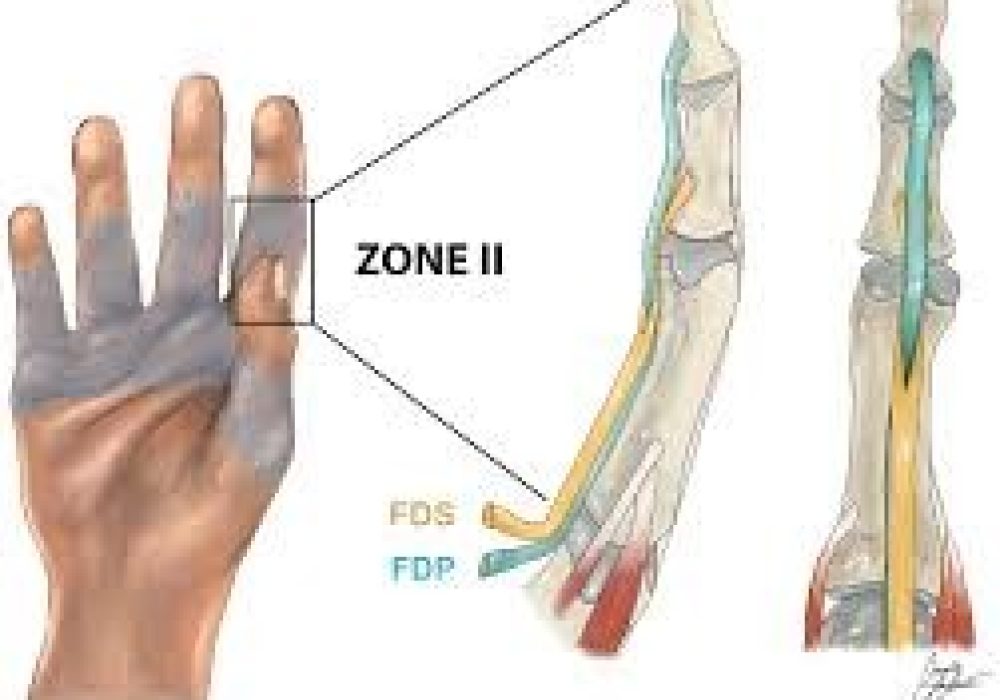
Flexor tendon injuries are classified into five anatomical zones, which guide treatment and prognosis:
Zone II injuries are particularly challenging because both FDS and FDP tendons run within a tight fibro-osseous sheath, making repair and rehabilitation complex.
Diagnosis of flexor tendon injury involves:
Prompt diagnosis is essential to plan surgical repair and prevent complications such as tendon retraction or adhesion formation.
Primary repair is indicated when:
Delayed or secondary repair may be necessary if the injury is old or complicated by infection or scarring.
The goal of primary flexor tendon repair is to restore tendon continuity with sufficient strength to allow early mobilization while minimizing bulk and interference with tendon gliding.
Several suture techniques exist, with the choice depending on surgeon preference and injury characteristics. Common methods include:
The core suture is usually supplemented with an epitendinous running suture to smooth the repair site and improve strength.
Non-absorbable, high-strength sutures such as polypropylene or polyester are preferred for core sutures. The epitendinous suture may use finer material to reduce bulk.
Preservation of the annular pulleys (especially A2 and A4) is critical to maintain tendon biomechanics. If a pulley is damaged, it may be repaired or reconstructed.
Nerve or vessel injuries identified during surgery are repaired simultaneously to optimize functional recovery.
Successful outcomes depend heavily on meticulous postoperative management.
Initially, the hand is immobilized in a dorsal blocking splint with the wrist in slight flexion and the fingers in flexion to protect the repair.
Early controlled motion protocols are now standard to prevent adhesions and stiffness. These include:
Protocols vary but generally start within the first week after surgery.
Regular follow-up is essential to monitor wound healing, tendon gliding, and detect complications such as rupture or infection.
Potential complications include:
With modern surgical techniques and rehabilitation, primary flexor tendon repair can restore good to excellent function in most patients. Factors influencing outcomes include:
Early repair combined with supervised rehabilitation yields the best results, allowing patients to regain near-normal finger flexion and hand function.
Primary flexor tendon repair is a delicate but rewarding procedure that restores essential hand function after tendon injury. Understanding the anatomy, injury patterns, surgical techniques, and rehabilitation principles is vital for optimal outcomes. Advances in suture technology and early mobilization protocols continue to improve recovery, enabling patients to return to their daily activities and work with minimal disability.
Chat With Me