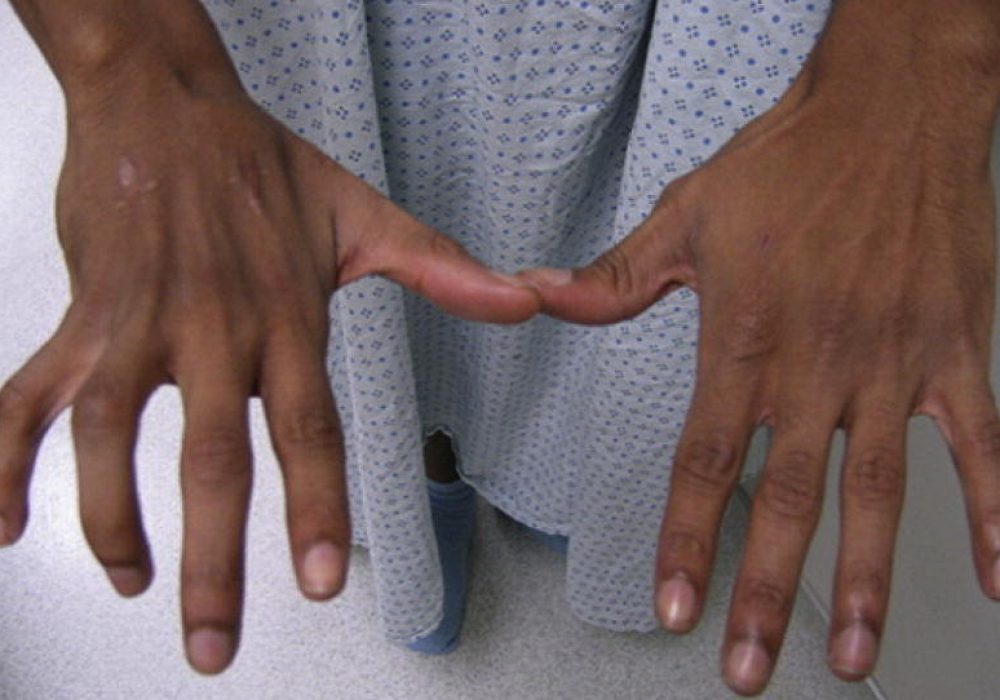
Claw deformity occurs due to an imbalance between the intrinsic and extrinsic muscles of the hand. The intrinsic muscles (lumbricals and interossei) normally flex the MCP joints and extend the PIP and DIP joints. When these muscles are paralyzed or weakened, the extrinsic extensor muscles cause hyperextension at the MCP joints, while the unopposed extrinsic flexors cause flexion at the PIP and DIP joints, resulting in the clawed posture.
Causes of Claw Deformity
- Ulnar nerve palsy: The most common cause, leading to paralysis of the intrinsic hand muscles.
- Median nerve injury: Can contribute to clawing of the index and middle fingers.
- Combined ulnar and median nerve injuries: Result in more severe clawing.
- Congenital conditions: Such as arthrogryposis or congenital intrinsic muscle hypoplasia.
- Trauma or nerve injury: Causing muscle imbalance.
- Neuromuscular diseases: Such as leprosy or Charcot-Marie-Tooth disease.
Symptoms of Claw Deformity
- Visible claw-like posture of the fingers.
- Difficulty with finger extension and grasp.
- Weak grip strength.
- Hand fatigue and discomfort.
- Impaired fine motor skills.
Diagnosis
- Clinical examination assessing finger posture, muscle strength, and nerve function.
- Electromyography (EMG) and nerve conduction studies to evaluate nerve injury.
- Imaging studies if needed to assess bone or joint abnormalities.
Treatment Options for Claw Correction
Non-Surgical Management
- Splinting: To support finger extension and prevent contractures.
- Physical therapy: Exercises to strengthen muscles and improve range of motion.
- Occupational therapy: To enhance hand function and adapt daily activities.
- Nerve repair or grafting: If nerve injury is recent and repairable
Surgical Treatment
Surgery is considered when non-surgical methods fail or in chronic cases with significant deformity.
Surgical Techniques for Claw Correction
1. Tendon Transfers
- Lumbrical plus transfer: Redirecting functioning tendons to restore intrinsic muscle function.
- Zancolli lasso procedure: Using the flexor digitorum superficialis tendon to prevent MCP hyperextension.
- Brand’s procedure: Transferring the flexor digitorum superficialis tendon to the extensor apparatus.
- Tendon transfers aim to rebalance muscle forces and restore finger extension.
2. Capsulodesis and Arthrodesis
- Capsulodesis: Tightening the volar plate or joint capsule to limit MCP hyperextension.
- Arthrodesis: Fusion of the MCP joint in a functional position in severe cases.
3. Intrinsic Muscle Reconstruction
- Using tendon grafts or muscle transfers to replace lost intrinsic muscle function.
4. Soft Tissue Release
- Releasing contracted structures limiting finger extension.
The Surgical Procedure
- Performed under regional or general anesthesia.
- Incisions are made to access tendons, joints, and soft tissues.
- Tendon transfers or releases are performed based on the chosen technique.
- Careful tensioning and fixation of tendons.
- Closure of incisions and application of splints.
Postoperative Care
- Immobilization in a splint or cast to protect the repair.
- Pain management and wound care.
- Early gentle range of motion exercises as advised.
Rehabilitation and Recovery
- Physical and occupational therapy to regain motion and strength.
- Gradual return to functional activities.
- Regular follow-up to monitor progress and prevent recurrence.
- Recovery time varies but functional improvement is often seen within months.
Risks and Complications
- Infection
- Tendon rupture or failure
- Joint stiffness or contracture
- Incomplete correction or recurrence
- Scar sensitivity or cosmetic concerns
Prognosis
- Early intervention and appropriate surgical technique improve outcomes.
- Most patients achieve significant functional and cosmetic improvement.
- Long-term follow-up is essential to address growth and functional changes.
When to See a Doctor
Seek medical advice if you notice:
- Claw-like deformity of the fingers.
- Difficulty with hand function or grip.
- Weakness or numbness in the hand.
- Progressive deformity or pain.
Conclusion
Claw correction is a vital intervention for restoring hand function and appearance in patients with intrinsic muscle paralysis or imbalance. Through a combination of surgical and non-surgical treatments, children and adults can regain significant hand function and improve quality of life. Early diagnosis and treatment by a hand specialist are crucial for optimal results. If you or your child has a claw deformity, consult a healthcare professional to explore the best treatment options.