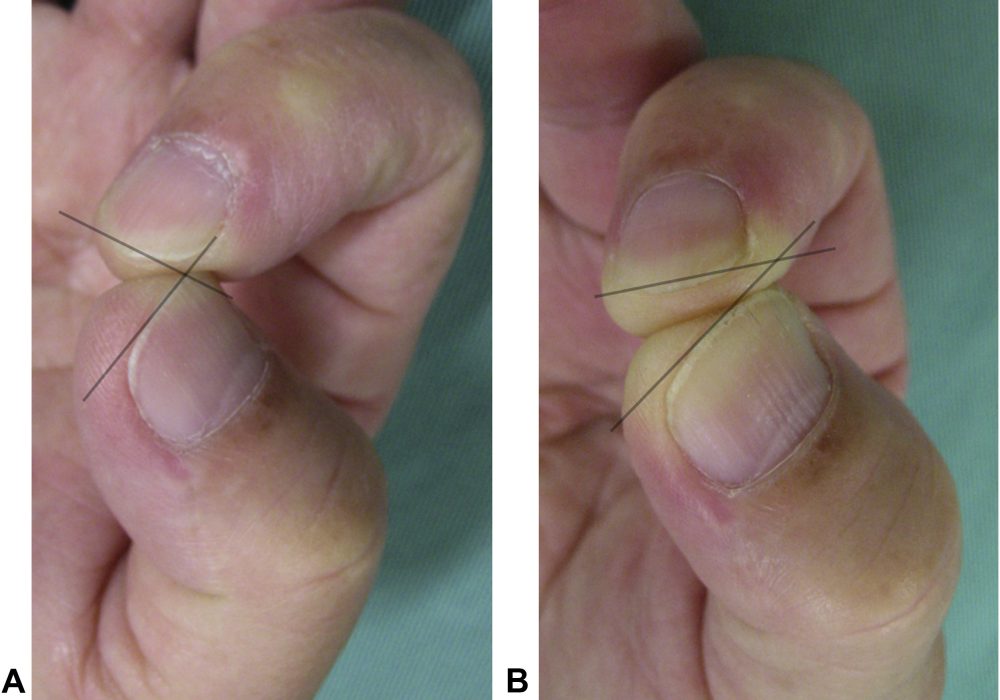
What Is Opponensplasty?
Opponensplasty involves transferring a tendon from a functioning muscle to replace the action of the paralyzed opponens pollicis muscle, which is responsible for thumb opposition. The procedure reestablishes the thumb’s ability to oppose the fingers, a critical movement for grasping, pinching, and manipulating objects.
Indications for Opponensplasty
Opponensplasty is indicated in patients with:
- Median nerve palsy: Resulting from trauma, compression (e.g., carpal tunnel syndrome), or birth injuries.
- Congenital hypoplasia or absence of the thenar muscles.
- Traumatic loss or paralysis of the opponens pollicis muscle.
- Failed nerve repair or nerve transfer surgeries affecting thumb opposition.
- Neuromuscular disorders causing intrinsic muscle weakness.
Goals of Opponensplasty
- Restore thumb opposition and abduction.
- Improve grip strength and hand function.
- Enhance fine motor skills.
- Prevent deformities such as thumb adduction contracture.
- Improve overall hand dexterity and quality of life.
Preoperative Evaluation
- Detailed clinical examination assessing thumb and hand function.
- Electromyography (EMG) to evaluate muscle activity.
- Imaging studies if needed to assess tendon and muscle status.
- Functional assessment to select the most suitable donor tendon.
Common Tendon Donors for Opponensplasty
- Flexor digitorum superficialis (FDS) tendon transfer: Most commonly used, typically from the ring finger.
- Palmaris longus tendon transfer: Used if present and suitable.
- Extensor indicis proprius (EIP) tendon transfer: Alternative donor in some cases.
- Abductor digiti minimi transfer: Less common.
The Opponensplasty Procedure
Surgical Steps
- Anesthesia: General or regional anesthesia is administered.
- Incision: Incisions are made to harvest the donor tendon and expose the thumb.
- Tendon Harvesting: The selected donor tendon is carefully detached while preserving its blood supply.
- Tendon Routing: The tendon is tunneled subcutaneously to the thumb.
- Attachment: The tendon is attached to the thumb’s metacarpal or the base of the proximal phalanx to recreate opposition.
- Tensioning: Proper tension is applied to allow effective thumb movement.
- Closure: Incisions are closed, and the hand is immobilized.
Duration
- The surgery typically lasts 1 to 2 hours.
Postoperative Care
- Immobilization in a splint or cast for 3 to 6 weeks.
- Pain management and wound care.
- Monitoring for complications such as infection or tendon rupture.
Rehabilitation and Recovery
- Physical and occupational therapy begin after immobilization.
- Exercises focus on restoring thumb opposition, strength, and coordination.
- Gradual return to functional activities.
- Full recovery may take several months.
Risks and Complications
- Infection
- Donor site weakness or functional loss
- Tendon rupture or failure
- Scar sensitivity or cosmetic concerns
- Incomplete restoration of thumb opposition
Prognosis
- Most patients experience significant improvement in thumb function.
- Success depends on careful patient selection, surgical technique, and rehabilitation.
- Early intervention and adherence to therapy optimize outcomes.
When to See a Doctor
Seek medical advice if you experience:
- Loss of thumb opposition or weakness.
- Difficulty with grasping or fine motor tasks.
- Pain, swelling, or signs of infection after surgery.
- Limited progress during rehabilitation.
Conclusion
Opponensplasty is a valuable surgical option for restoring thumb opposition and improving hand function in patients with median nerve palsy or intrinsic muscle paralysis. By transferring a functioning tendon, this procedure enables patients to regain essential hand movements necessary for daily living. Early evaluation by a hand surgeon and dedicated rehabilitation are key to achieving the best results. If you or your child has impaired thumb function, consult a specialist to explore whether opponensplasty is appropriate.