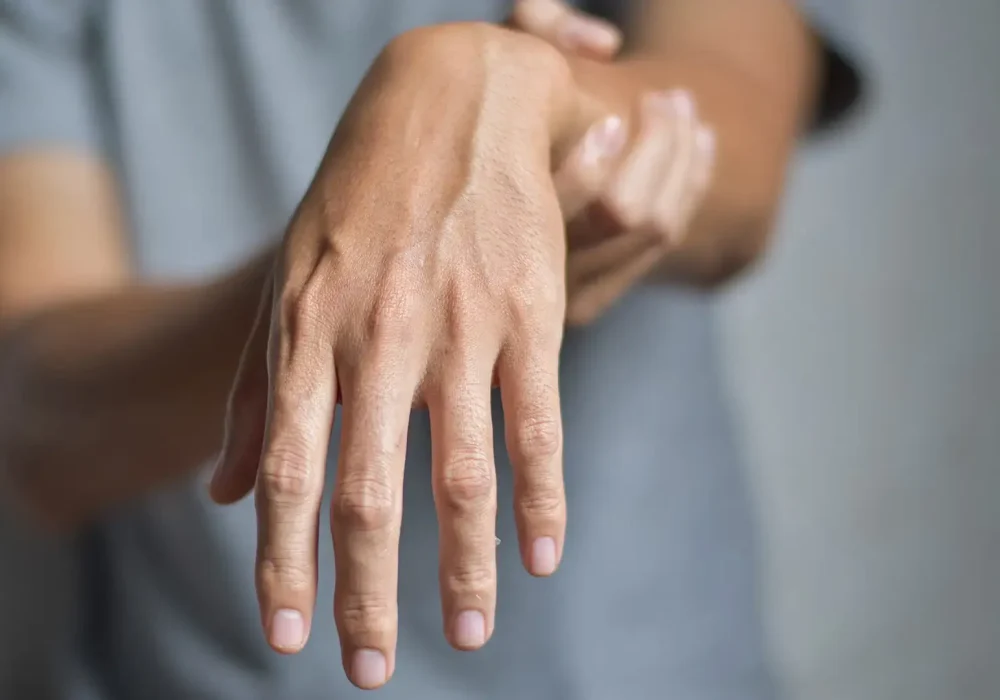
What Is Wrist Drop?
Wrist drop occurs due to paralysis or weakness of the muscles responsible for wrist and finger extension, primarily innervated by the radial nerve. The radial nerve controls the extensor muscles in the forearm that straighten the wrist and fingers. When this nerve is injured or compressed, the muscles cannot function properly, leading to wrist drop.
Causes of Wrist Drop
Wrist drop can result from various causes, including:
1. Radial Nerve Injury
- Trauma: Fractures of the humerus (upper arm bone), especially mid-shaft fractures, can injure the radial nerve.
- Compression: Prolonged pressure on the radial nerve, such as from improper use of crutches (“crutch palsy”) or sleeping with the arm in an awkward position (“Saturday night palsy”).
- Lacerations: Cuts or penetrating injuries to the arm.
- Surgical complications: Iatrogenic injury during surgeries near the humerus or elbow.
2. Neurological Disorders
- Peripheral neuropathy: Due to diabetes, alcoholism, or toxins.
- Radial nerve entrapment: At the spiral groove or the supinator muscle.
- Brachial plexus injury: Affecting the radial nerve fibers.
3. Other Causes
- Tumors or cysts: Compressing the radial nerve.
- Inflammatory conditions: Such as neuritis.
- Stroke or central nervous system lesions: Rarely causing wrist drop.
Symptoms of Wrist Drop
- Inability to extend the wrist and fingers, causing the hand to hang limply.
- Weakness or paralysis of wrist and finger extensors.
- Numbness or tingling on the back of the hand and forearm.
- Difficulty with grip and hand function.
- Muscle wasting in chronic cases.
Diagnosis
Clinical Examination
- Assessment of wrist and finger extension strength.
- Sensory examination of the radial nerve distribution.
- Evaluation of reflexes and muscle tone.
Imaging Studies
- X-rays to identify fractures or bone abnormalities.
- MRI or ultrasound to assess nerve compression or soft tissue lesions.
Electrophysiological Tests
- Nerve conduction studies and electromyography (EMG) to evaluate nerve function and localize the lesion.
Treatment of Wrist Drop
Non-Surgical Management
- Splinting: Wrist splints or braces to maintain the wrist in an extended position and prevent contractures.
- Physical therapy: Exercises to maintain joint mobility and muscle strength.
- Medications: Pain relief and treatment of underlying conditions (e.g., diabetes).
- Activity modification: Avoiding pressure on the radial nerve.
Surgical Treatment
- Nerve repair or grafting: In cases of nerve transection.
- Nerve decompression: For entrapment syndromes.
- Tendon transfers: To restore wrist and finger extension when nerve recovery is unlikely.
- Neurolysis: Removal of scar tissue around the nerve.
Prognosis and Recovery
- Recovery depends on the cause and severity of the nerve injury.
- Mild compression injuries may recover fully within weeks to months.
- Severe injuries or nerve transections may require surgery and have variable outcomes.
- Early intervention and rehabilitation improve functional recovery.
When to See a Doctor
Seek medical attention if you experience:
- Sudden inability to extend the wrist or fingers.
- Numbness or weakness in the hand or forearm.
- Persistent pain or swelling after trauma.
- Signs of infection or worsening symptoms.
Conclusion
Wrist drop is a disabling condition caused primarily by radial nerve injury or compression. Prompt diagnosis and appropriate treatment, including splinting, physical therapy, and possibly surgery, are essential to restore hand function and prevent complications. If you or a loved one experiences symptoms of wrist drop, consult a healthcare professional promptly for evaluation and management.