What Is Primary Extensor Tendon Repair?
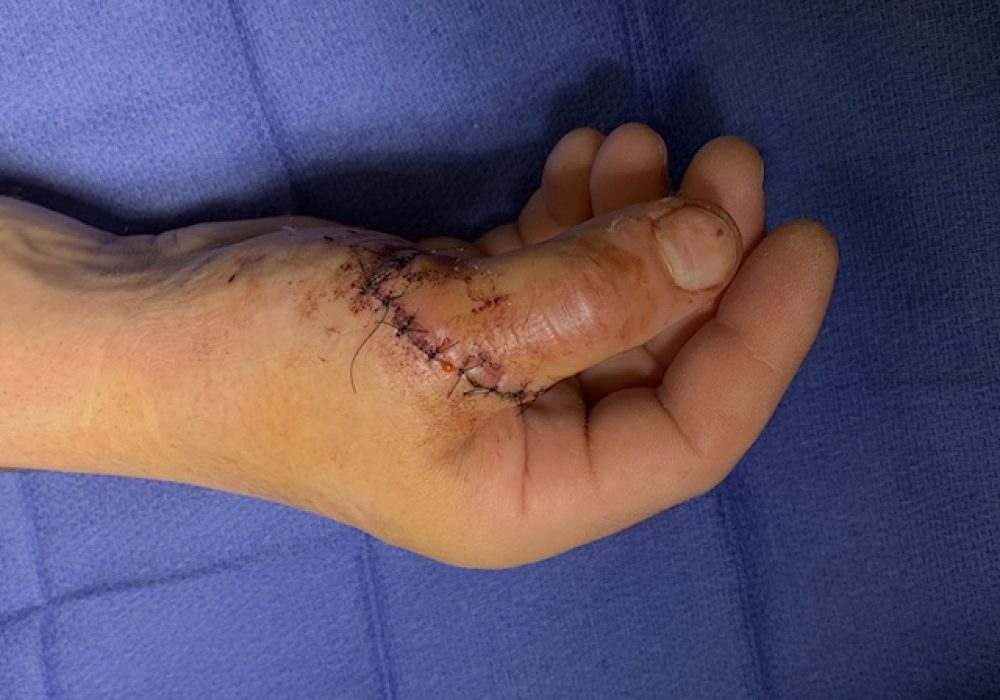
Primary extensor tendon repair involves surgically suturing a torn or lacerated extensor tendon soon after injury, typically within the first 1 to 3 weeks. The goal is to restore the tendon’s integrity, allowing it to heal and regain its ability to extend the affected finger, thumb, or wrist. This procedure is most successful when performed promptly before tendon retraction, scarring, or muscle atrophy occur.
Anatomy of Extensor Tendons
The extensor tendons run along the back (dorsal side) of the hand and fingers. They originate from muscles in the forearm and insert into the bones of the fingers and thumb. The extensor mechanism is complex, with multiple tendons controlling different joints:
- Extensor digitorum communis: Extends the fingers.
- Extensor pollicis longus and brevis: Extend the thumb.
- Extensor indicis: Extends the index finger.
- Extensor digiti minimi: Extends the little finger.
Causes of Extensor Tendon Injuries
- Lacerations or cuts from sharp objects.
- Blunt trauma causing tendon rupture.
- Sports injuries.
- Fractures with associated tendon damage.
- Open wounds or crush injuries.
Indications for Primary Extensor Tendon Repair
- Complete or partial laceration of extensor tendons.
- Loss of active extension of fingers, thumb, or wrist.
- Injuries presenting within 2 to 3 weeks of trauma.
- Tendon injuries without significant contamination or infection.
Contraindications
- Delayed presentation beyond 3 weeks (may require secondary repair or grafting).
- Severe contamination or infection.
- Extensive soft tissue loss requiring complex reconstruction.
The Primary Extensor Tendon Repair Procedure
Preoperative Evaluation
- Clinical examination to assess tendon function and injury extent.
- Imaging such as ultrasound or MRI may be used in complex cases.
- Assessment of associated injuries (bones, nerves, vessels).
Surgical Steps
- Anesthesia: Regional or general anesthesia is administered.
- Exposure: A dorsal incision is made over the injured tendon.
- Identification: The torn tendon ends are identified and mobilized.
- Debridement: Damaged or frayed tendon edges are trimmed.
- Suturing: Tendon ends are sutured together using strong, non-absorbable sutures with techniques such as the modified Kessler or figure-of-eight stitch.
- Tension Adjustment: The repair is checked for appropriate tension and smooth gliding.
- Closure: The skin is closed, often with fine sutures.
- Immobilization: The wrist and fingers are immobilized in extension using a splint.
Duration
- The surgery typically lasts 30 minutes to 1 hour depending on injury complexity.
Postoperative Care
- Immobilization in a splint or cast for 4 to 6 weeks to protect the repair.
- Elevation and pain management.
- Wound care to prevent infection.
- Early monitoring for complications.
Rehabilitation and Recovery
- After immobilization, gradual mobilization begins under the guidance of a hand therapist.
- Controlled passive and active range of motion exercises to prevent stiffness and adhesions.
- Strengthening exercises introduced as healing progresses.
- Full recovery of function may take 3 to 6 months.
Risks and Complications
- Infection
- Tendon rupture or repair failure
- Adhesion formation leading to stiffness
- Joint contractures
- Scar sensitivity or hypertrophic scarring
- Incomplete restoration of extension
Prognosis
- Early primary repair generally results in excellent functional outcomes.
- Success depends on timely surgery, surgical technique, and adherence to rehabilitation.
- Most patients regain near-normal extension and hand function.
When to See a Doctor
Seek prompt medical attention if you experience:
- Loss of ability to straighten fingers, thumb, or wrist after injury.
- Visible lacerations or wounds on the back of the hand.
- Pain, swelling, or deformity.
- Signs of infection such as redness, warmth, or discharge.
Conclusion
Primary extensor tendon repair is a critical surgical intervention for restoring hand and finger extension after tendon injury. Early diagnosis and prompt surgical repair, combined with dedicated rehabilitation, are essential to achieve optimal functional recovery and prevent long-term disability. If you or your child has sustained an extensor tendon injury, consult a hand surgeon or orthopedic specialist promptly to discuss treatment options.