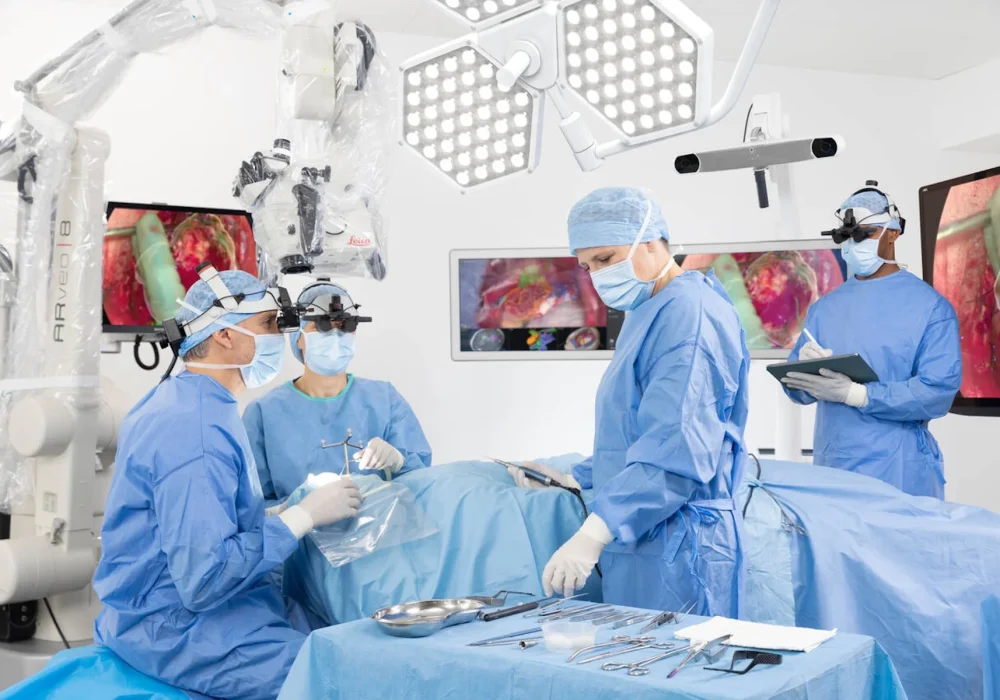
Microsurgery is a specialized surgical technique that involves the use of a microscope and precision instruments to perform intricate operations on tiny structures of the body. This advanced form of surgery allows surgeons to operate on minute blood vessels, nerves, and tissues that are often only a few millimeters in diameter. Microsurgery has revolutionized many fields of medicine by enabling procedures that were once considered impossible or highly risky.
Microsurgery refers to surgical procedures performed under magnification using an operating microscope. The microscope provides a highly magnified, illuminated view of the surgical field, allowing surgeons to see details invisible to the naked eye. This enhanced visualization is critical when working on delicate structures such as small blood vessels, nerves, lymphatic vessels, and other fine tissues.
The instruments used in microsurgery are specially designed to be extremely fine and precise. These include micro-forceps, micro-scissors, and ultra-fine sutures that can be as thin as a human hair. The combination of magnification and specialized tools enables surgeons to perform complex reconstructions, repairs, and transplants with remarkable accuracy.
The origins of microsurgery date back to the early 20th century, but it was not until the 1960s that the field truly began to develop. The invention of the operating microscope and the refinement of microsurgical instruments paved the way for modern microsurgical techniques.
One of the pioneering figures in microsurgery was Dr. Julius Jacobson, who in 1960 performed the first successful microvascular anastomosis (joining of small blood vessels) using an operating microscope. This breakthrough opened the door to a wide range of reconstructive procedures, including reattachment of severed fingers and limbs, free tissue transfers, and nerve repairs.
Since then, microsurgery has expanded into numerous medical specialties, including plastic and reconstructive surgery, neurosurgery, ophthalmology, otolaryngology, and orthopedics. Advances in technology, such as high-definition microscopes, robotic assistance, and improved microsurgical instruments, continue to enhance the precision and outcomes of these procedures.
Microsurgery is used in a variety of clinical settings to treat conditions that require meticulous repair or reconstruction of small anatomical structures. Some of the key applications include:
Microsurgery plays a vital role in reconstructive surgery, particularly in cases involving trauma, cancer resection, or congenital defects. Surgeons use microsurgical techniques to transfer tissue from one part of the body to another (free flap surgery) to restore form and function. This may involve reconnecting tiny blood vessels and nerves to ensure the transplanted tissue survives and functions properly.
Examples include breast reconstruction after mastectomy, repair of complex facial injuries, and restoration of hand function following trauma.
The hand contains numerous small nerves, tendons, and blood vessels that require precise repair after injury. Microsurgery enables surgeons to reattach severed fingers, repair nerve injuries, and restore blood flow to damaged tissues. This can significantly improve functional outcomes and reduce disability.
In neurosurgery, microsurgical techniques are used to operate on delicate brain and spinal cord structures. The operating microscope allows surgeons to remove tumors, repair aneurysms, and decompress nerves with minimal damage to surrounding tissues.
Microsurgery is fundamental in eye surgery, including cataract removal, corneal transplants, and retinal repairs. The precision required to operate on the eye’s tiny structures makes microsurgical tools and magnification indispensable.
Microsurgical lymphaticovenous anastomosis (LVA) is a technique used to treat lymphedema, a condition characterized by swelling due to lymphatic fluid accumulation. By connecting lymphatic vessels to nearby veins, microsurgeons can improve lymphatic drainage and reduce swelling.
Microsurgery requires a unique set of skills and equipment. Surgeons undergo specialized training to develop the hand-eye coordination and fine motor skills necessary for these procedures.
The cornerstone of microsurgery is the operating microscope, which provides magnification ranging from 4x to over 40x. It also offers adjustable lighting and stereoscopic vision, giving the surgeon a three-dimensional view of the surgical field.
Microsurgical instruments are designed to be lightweight and extremely precise. Common tools include:
Microsurgical suturing requires meticulous technique to avoid damaging fragile tissues. Surgeons use interrupted or continuous sutures with extremely fine needles to ensure a watertight and tension-free closure.
Robotic systems are increasingly being integrated into microsurgery to enhance precision and reduce surgeon fatigue. Robots can filter out hand tremors and allow for more stable instrument manipulation in confined spaces.
Microsurgery offers numerous advantages over traditional surgical methods:
Despite its many benefits, microsurgery also presents challenges:
The field of microsurgery continues to evolve rapidly. Emerging technologies promise to further enhance surgical precision and patient outcomes:
For contractures like Dupuytren’s disease, surgical release or removal of thickened tissue can straighten the fingers.
Microsurgery represents a remarkable advancement in surgical care, enabling the treatment of conditions that require extraordinary precision. By combining magnification, specialized instruments, and skilled technique, microsurgeons can restore function and improve quality of life for patients with complex injuries and diseases.
Whether repairing a severed finger, reconstructing a breast, or removing a brain tumor, microsurgery continues to push the boundaries of what is surgically possible. As technology advances and training improves, the future of microsurgery holds exciting potential to transform medicine and patient care.
Chat With Me