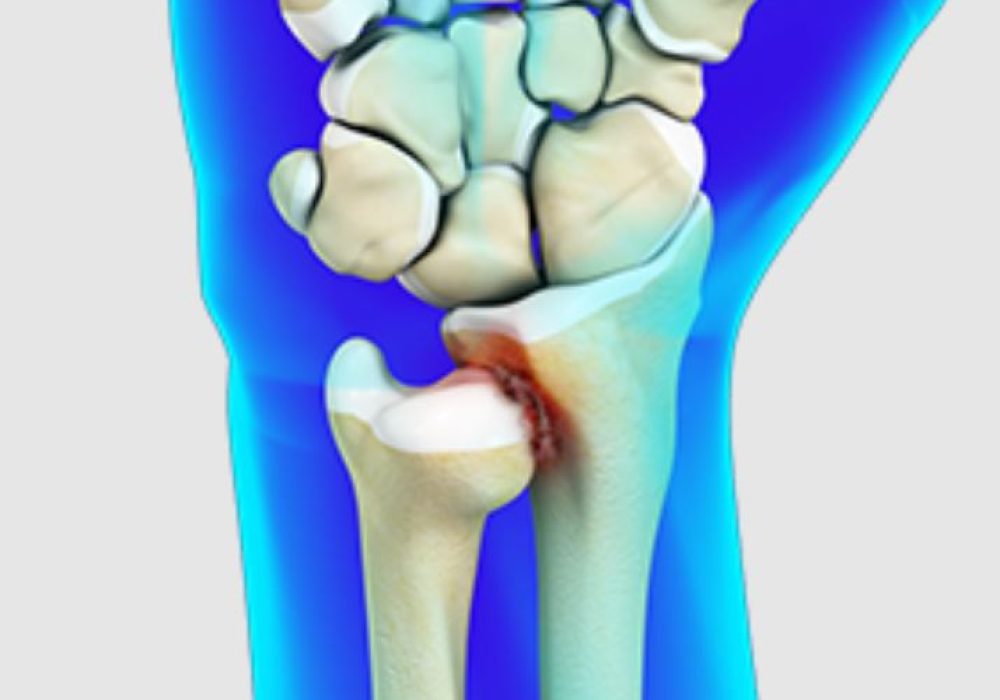
Distal radioulnar joint osteoarthritis is a condition in which arthritis in distal radioulnar joint (DRUJ) causes pain and limited function in wrist joint. DRUJ plays a vital role in forearm rotation and axial weight bearing. Soft tissues around this joint play an important role in providing stability to this joint 1.
Most common cause for arthritis is due to trauma 2. Other causes include congenital anomalies such as Madelung deformity, inflammatory conditions and degenerative conditions.
Presents with pain especially in forearm rotation 3. Decreased range in forearm rotation and decreased grip strength. Other provocative tests such as ‘piano key’ sign, ulna grind test, lunotriquetral ballottement test can be performed to elicit any DRUJ injury 1.
Plain radiographs would note osteophytes, sclerosis around DRUJ. CT would help to provide more detail view of the DRUJ especially around the sigmoid notch.
Not necessary for diagnosis of DRUJ osteoarthritis. Can help to identify any soft tissue injuries to triangular fibrocartilage complex (TFCC), Extensor carpi ulnaris (ECU), radio-ulnar ligaments which play a pivotal role in providing stability to DRUJ.
Non operative treatment is usually considered first time for management of this condition. This includes analgesia, activity modification, splinting and corticosteroid injections. Surgical options include partial or complete resection of ulna or prosthetic replacement 1.
Chat With Me