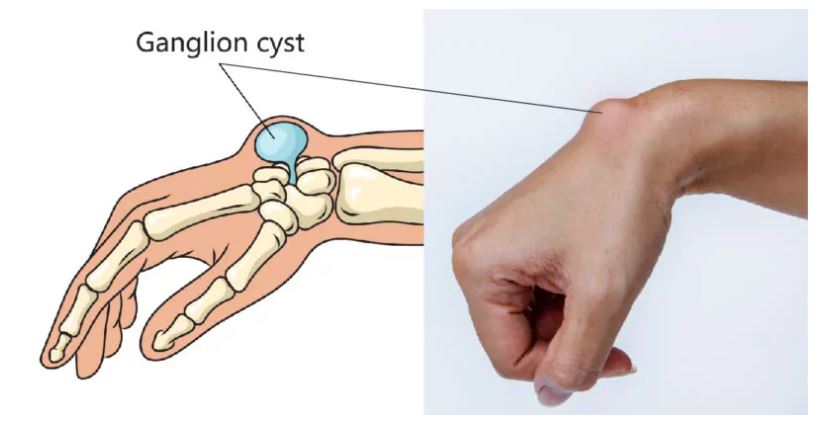
A Ganglion Cyst is one of the most common types of noncancerous lumps that form near joints or tendons. Although the word cyst can sometimes sound alarming, ganglion cysts are generally harmless and do not spread to other parts of the body. They usually appear as round or oval swellings filled with a thick, jelly-like fluid. Most often, they are found on the wrist, but they can also occur on the hands, fingers, ankles, and feet.
While ganglion cysts are not dangerous, they may cause discomfort, pain, or limit movement if they press against nearby nerves or tendons. Some people are concerned about the appearance of the lump, while others seek treatment because of pain or restricted mobility.
Appearance and Size
Usually smooth, round, and soft to touch.
Size may vary from as small as a pea to over an inch in diameter.
Cysts may grow larger with repetitive joint use and shrink when rested.
Location
Most common on the back of the wrist.
Can also appear on the palm side of the wrist, at the base of fingers, on the ankles, or feet.
Fluid Inside
The cyst contains a thick, sticky fluid that is similar to the lubricating fluid found in joints.
This fluid is clear or pale in color.
The exact cause of ganglion cysts is not always clear. However, several factors may play a role:
It is important to note that ganglion cysts are not cancerous and do not spread.
Not all ganglion cysts cause symptoms. Some may go unnoticed until they grow in size. Common symptoms include:
Doctors can usually diagnose a ganglion cyst by:
In many cases, treatment is not necessary. If the cyst is painless and does not cause problems, doctors may simply recommend watchful waiting. However, treatment may be needed if the cyst is painful, restricts movement, or causes cosmetic concern.
Most ganglion cysts are harmless, but potential complications include:
There is no guaranteed way to prevent ganglion cysts, but some measures may help reduce risk:
A Ganglion Cyst is a soft, fluid-filled lump that develops near joints or tendons, most commonly in the wrist or hand. Although harmless, it can cause pain, numbness, or difficulty moving the affected joint if it presses on nearby nerves. Diagnosis is usually simple, and treatment options range from observation to aspiration or surgical removal.
While ganglion cysts may come back even after treatment, they are not dangerous and do not lead to cancer. With proper medical advice and care, most people can continue their daily activities without major problems.
In summary, a ganglion cyst is a common, noncancerous swelling that is usually harmless but may need treatment if painful or bothersome.
Chat With Me