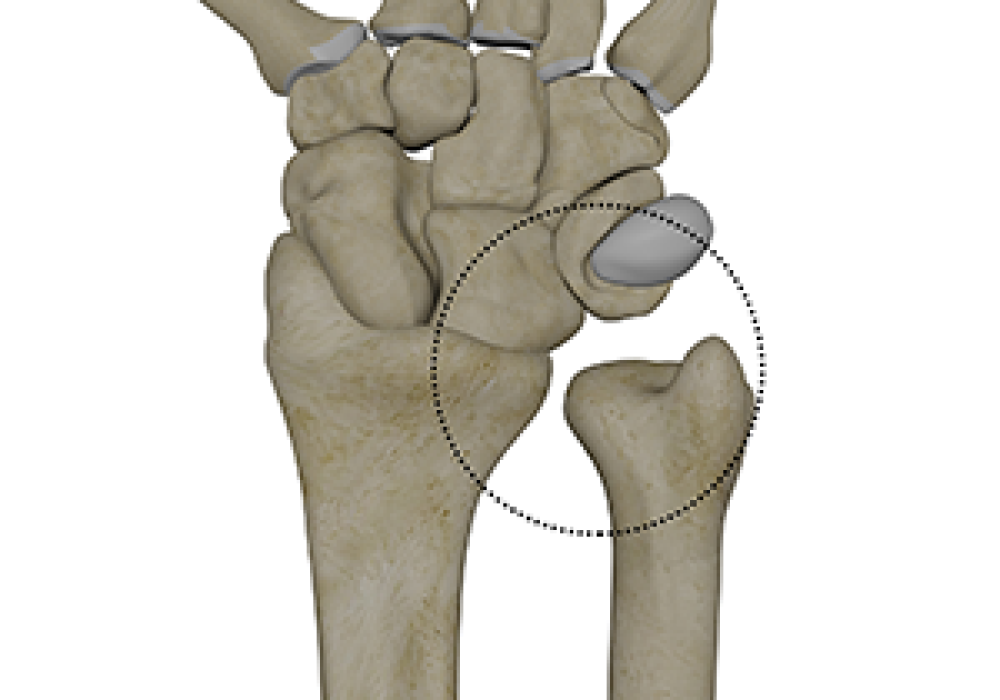
The distal radioulnar joint (DRUJ) is a pivotal articulation between the distal ends of the radius and ulna, essential for forearm rotation and wrist stability. Instability or dislocation of the DRUJ can significantly impair wrist function and is often classified based on the direction of displacement: dorsal, volar, or multidirectional.
The DRUJ is stabilized by several key structures: the triangular fibrocartilage complex (TFCC), the dorsal and volar radioulnar ligaments, the interosseous membrane, and the joint capsule. The TFCC acts as the primary stabilizer, cushioning and maintaining congruity between the radius and ulna during pronation and supination.
DRUJ instability can result from acute trauma such as falls, fractures (notably distal radius fractures and Galeazzi fracture-dislocations), or ligamentous injuries. Chronic instability may develop from repetitive stress or untreated acute injuries. Galeazzi fractures, characterized by a radial shaft fracture with DRUJ dislocation, are a classic example requiring surgical stabilization.
Patients often report wrist pain, a feeling of looseness or clicking during forearm rotation, and decreased grip strength. Physical examination may reveal tenderness over the DRUJ, abnormal mobility of the ulna, and positive provocative tests like the piano key sign.
Radiographic evaluation includes standard wrist X-rays, with special views to assess DRUJ alignment. CT scans provide detailed assessment of joint congruity and subtle subluxations. MRI is valuable for evaluating soft tissue injuries, especially the TFCC.
Post-immobilization, hand therapy focuses on restoring range of motion, strengthening the forearm muscles, and improving proprioception to prevent recurrence.
Understanding the complex anatomy and biomechanics of the DRUJ is crucial for accurate diagnosis and effective management of its instabilities and dislocations, ensuring optimal functional recovery.
Acute DRUJ Instability:
Chronic Instability:
Salvage Procedures:
DRUJ instability and dislocations are complex conditions involving bony and soft tissue structures. Accurate diagnosis requires thorough clinical examination supported by advanced imaging. Treatment ranges from conservative management to complex reconstructive surgeries, with the goal of restoring joint stability, relieving pain, and preserving forearm rotation and grip strength. Understanding the intricate anatomy and biomechanics of the DRUJ is essential for optimal patient outcomes.
Distal radioulnar joint (DRUJ) instabilities and dislocations represent challenging clinical conditions due to the joint’s complex anatomy and reliance on both bony congruity and soft tissue stabilizers, particularly the triangular fibrocartilage complex (TFCC). Accurate diagnosis through careful clinical evaluation and advanced imaging is essential to identify the type and extent of instability. Early and appropriate management—ranging from conservative immobilization in acute cases to surgical repair or reconstruction in chronic or complex injuries—is critical to restore joint stability, preserve forearm rotation, and maintain wrist function. A comprehensive understanding of DRUJ biomechanics and pathology enables tailored treatment strategies that optimize functional outcomes and minimize long-term complications such as chronic pain and osteoarthritis.
Chat With Me