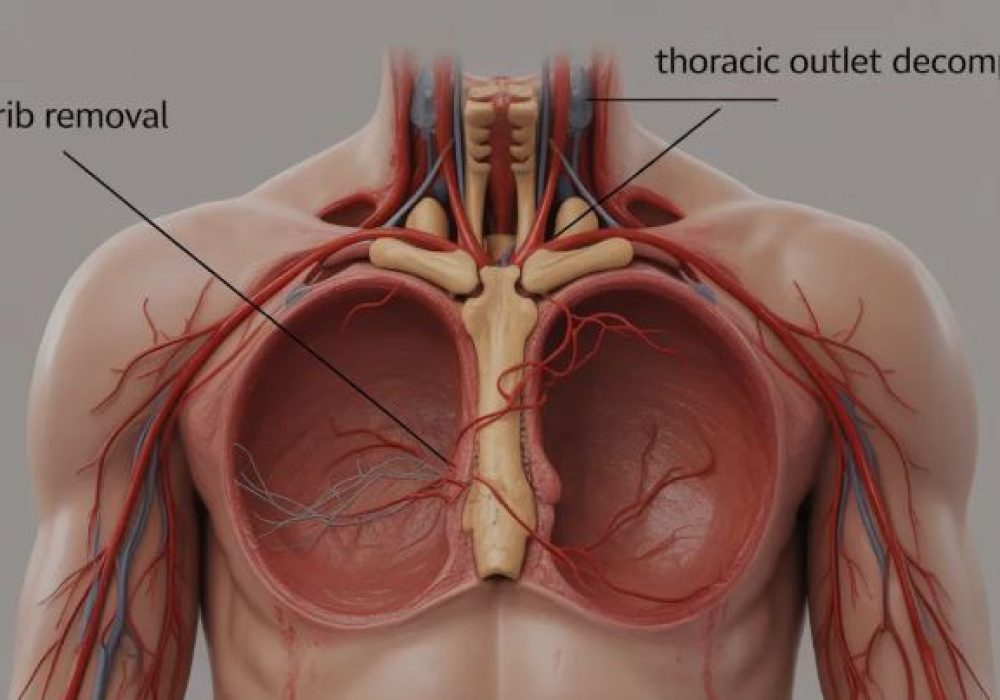
Thoracic Outlet Decompression Surgery is a surgical procedure performed to relieve pressure on nerves and blood vessels that pass through the thoracic outlet, a narrow space between the collarbone (clavicle) and the first rib. This area contains important structures such as the brachial plexus (a network of nerves supplying the arm), the subclavian artery, and the subclavian vein. When these structures are compressed, it leads to a condition known as Thoracic Outlet Syndrome (TOS). Surgery is considered when non-surgical treatments fail to improve symptoms or when vascular compromise threatens long-term health.
Thoracic Outlet Syndrome can occur in three main forms, depending on which structure is compressed:
Thoracic Outlet Decompression Surgery is generally recommended when:
The main goal of surgery is to remove the source of compression and create more space in the thoracic outlet. The approach depends on the patient’s condition and the surgeon’s preference. Common techniques include:
Recovery varies depending on the type of TOS and the surgical approach. In most cases, hospital stay is short—typically 2 to 5 days.
Postoperative recovery involves:
Surgical success depends on the type of TOS and severity at the time of surgery.
Delaying treatment can lead to complications such as permanent nerve injury, chronic pain, or blood clots. Early recognition of symptoms—such as tingling in the arm, swelling, or changes in hand color—followed by appropriate evaluation ensures timely management. Surgery plays a key role in preventing disability, restoring circulation, and improving overall quality of life for patients with severe TOS.
Chat With Me