What Is Nerve Grafting?
Nerve grafting is a microsurgical procedure that involves harvesting a healthy nerve segment, usually from a less critical sensory nerve, and using it to replace or bridge a damaged section of a nerve that cannot be directly sutured. The graft acts as a scaffold to guide regenerating nerve fibers (axons) across the injury site.
Indications for Nerve Grafting
Nerve grafting is indicated in cases where:
- There is a significant gap between the two ends of a severed nerve that cannot be repaired by direct suturing without tension.
- The nerve injury involves segmental loss or extensive damage.
- Previous nerve repair has failed or is not feasible.
- Traumatic injuries such as lacerations, crush injuries, or avulsions.
- Tumor resection requiring nerve segment removal.
- Certain congenital nerve defects.
Types of Nerve Grafts
1. Autografts
- The most common type of nerve graft.
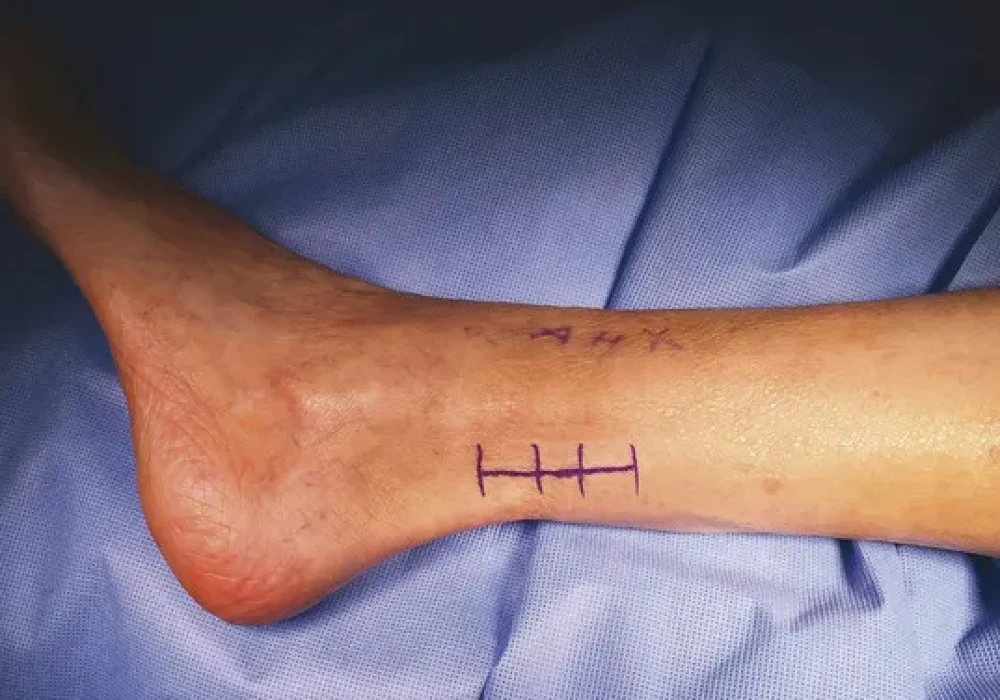
- Harvested from the patient’s own body, typically from sensory nerves such as the sural nerve (located in the leg), medial antebrachial cutaneous nerve (forearm), or the superficial radial nerve.
- Advantages: No risk of rejection, good compatibility.
- Disadvantages: Donor site morbidity, including numbness or sensory loss.
2. Allografts
- Donor nerve tissue obtained from cadaveric sources.
- Processed to remove cellular components to reduce immune rejection.
- Used when autografts are not feasible or when large grafts are needed.
- Require immunosuppression or are processed to be non-immunogenic.
3. Synthetic Nerve Conduits
- Artificial tubes or scaffolds used to bridge small nerve gaps.
- Often used in conjunction with nerve grafts or for small defects.
The Nerve Grafting Procedure
Preoperative Evaluation
- Detailed clinical examination to assess the extent of nerve injury.
- Electrophysiological studies (nerve conduction studies and electromyography) to evaluate nerve function.
- Imaging studies such as MRI or ultrasound may be used to visualize nerve damage.
Surgical Steps
- Anesthesia: General or regional anesthesia is administered.
- Exposure: The injured nerve is exposed through an incision.
- Debridement: Damaged nerve ends are trimmed to healthy tissue.
- Harvesting the Graft: A suitable donor nerve segment is harvested from the patient.
- Graft Placement: The nerve graft is sutured microsurgically to the proximal and distal ends of the injured nerve using fine sutures under a microscope.
- Closure: The surgical site is closed in layers.
Duration
The procedure duration varies depending on the injury complexity and graft length but typically lasts 2 to 4 hours.
Recovery and Rehabilitation
- Nerve regeneration occurs at a rate of approximately 1 to 3 millimeters per day.
- Recovery of function may take months to years depending on the injury location and extent.
- Physical therapy is essential to maintain joint mobility, prevent muscle atrophy, and facilitate functional recovery.
- Sensory re-education and occupational therapy may be required to optimize outcomes.
Risks and Complications
- Infection
- Donor site morbidity (numbness, pain)
- Graft failure or poor nerve regeneration
- Neuroma formation (painful nerve scar)
- Persistent weakness or sensory loss
Prognosis
- Outcomes depend on factors such as patient age, injury severity, time from injury to surgery, and rehabilitation.
- Early intervention generally leads to better results.
- Complete recovery is not always possible, but nerve grafting significantly improves function compared to no repair.
When to See a Doctor
Seek medical evaluation if you experience:
- Loss of sensation or motor function after trauma
- Persistent numbness, tingling, or weakness
- Signs of nerve injury such as muscle wasting or deformity
Conclusion
Nerve grafting is a vital surgical technique for repairing complex peripheral nerve injuries that cannot be directly repaired. By bridging nerve gaps, it facilitates nerve regeneration and functional recovery. Advances in microsurgical techniques and rehabilitation have improved outcomes, offering hope to patients with debilitating nerve injuries. If you have sustained a nerve injury, consult a specialist to explore the best treatment options, including nerve grafting.