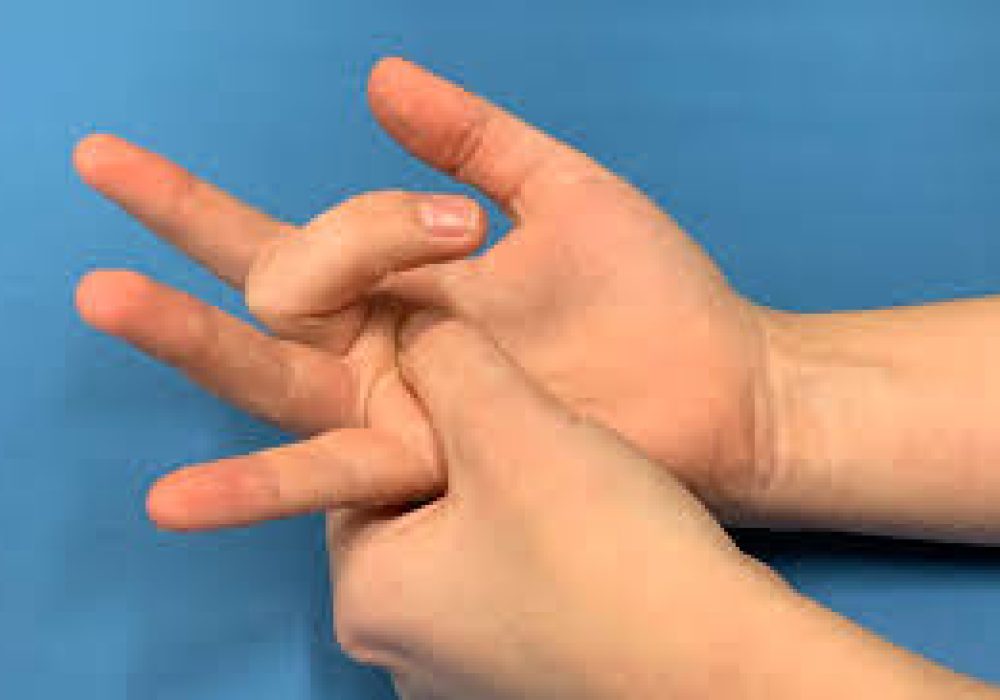
Trigger Finger, also known as stenosing tenosynovitis, is a condition in which one of the fingers becomes stuck in a bent position and then suddenly snaps straight, similar to pulling and releasing a trigger. It occurs due to narrowing of the sheath surrounding the tendon in the affected finger, which interferes with smooth tendon gliding. Although any finger can be involved, the ring finger and thumb are most commonly affected.
Trigger finger can occur in adults of any age but is most common between the ages of 40 and 60 years. It is more frequently seen in women than in men. While generally not life-threatening, the condition can cause significant discomfort, reduced grip strength, and limitations in daily activities.
The fingers bend and straighten with the help of flexor tendons, which run from the forearm muscles to the fingertips. These tendons glide through protective tunnels called sheaths, stabilized by pulley-like structures that hold the tendons close to the bone.
In trigger finger, inflammation or thickening occurs at the level of the A1 pulley (located at the base of the finger or thumb). This causes narrowing of the tunnel and sometimes a small nodule develops on the tendon. As a result, the tendon cannot glide smoothly. When the finger bends, the swollen tendon may get stuck behind the pulley, and when it straightens, it snaps with a jerky motion, producing the characteristic “triggering.”
The exact cause of trigger finger is not always clear, but several factors increase the likelihood of developing the condition:
The symptoms of trigger finger may develop gradually or suddenly. Common signs include:
Treatment of trigger finger depends on the severity of symptoms, duration, and patient-specific factors such as underlying medical conditions.
The outlook for trigger finger is excellent. Many patients respond well to conservative treatments such as rest, splinting, or injections. For those requiring surgery, long-term results are generally very good, with most regaining full finger motion and strength.
Trigger finger is a common hand condition that interferes with normal finger movement, often causing pain, stiffness, and locking of the digit. It results from narrowing of the tendon sheath at the A1 pulley, leading to impaired tendon gliding. While the condition can be bothersome, it is usually not dangerous and has effective treatments ranging from rest and splinting to steroid injections and minor surgery. Early recognition and treatment can prevent complications and restore full hand function, allowing patients to return to their regular activities without limitation.
Chat With Me