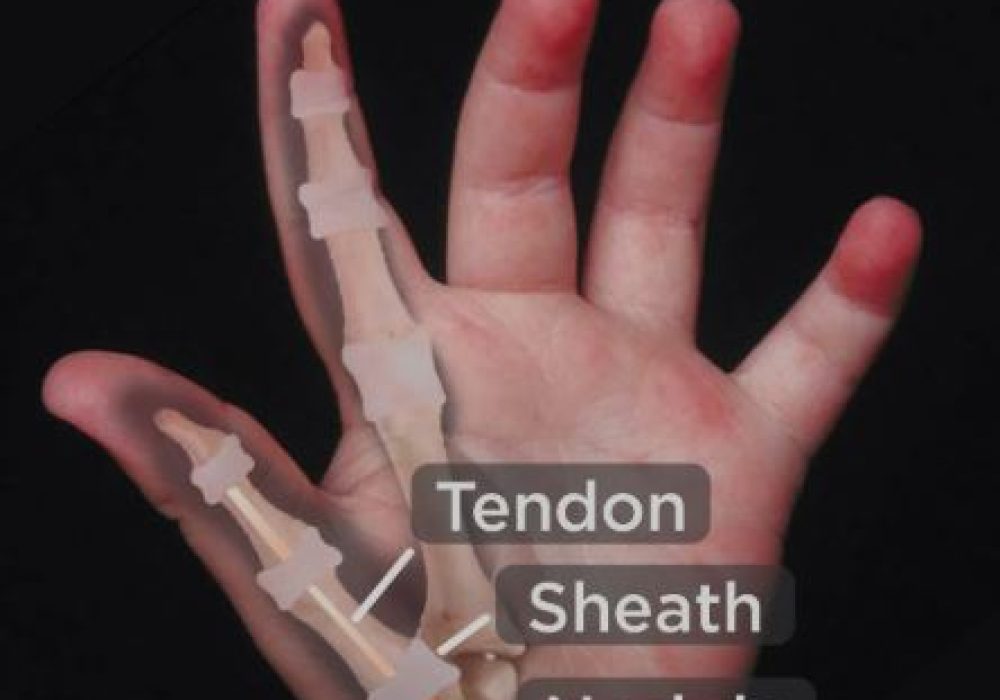
A1 pulley release is a surgical procedure performed to treat trigger thumb, a condition in which the thumb becomes painful, stiff, or locked in a bent position due to narrowing of the tendon sheath at the level of the A1 pulley. The A1 pulley is a fibrous band located at the base of the thumb that helps keep the flexor tendon in place as it glides during movement. When this pulley becomes thickened or inflamed, the tendon can no longer move smoothly, leading to pain, clicking, and triggering. Releasing the pulley surgically restores free tendon movement and relieves symptoms.
The thumb flexor tendon passes through a series of pulleys—ligament-like structures that act as guides to hold the tendon close to the bone, ensuring efficient motion. The A1 pulley, situated at the base of the thumb near the metacarpophalangeal (MCP) joint, is the most common site of stenosis (narrowing).
When the tendon lining (tenosynovium) becomes inflamed, or the pulley thickens, the tendon may form a nodule. This nodule catches at the entrance of the pulley during movement, producing the characteristic “triggering” or locking.
Trigger thumb can arise from several factors, including:
Not all patients require surgery. First-line treatment often involves rest, splinting, non-steroidal anti-inflammatory drugs (NSAIDs), or corticosteroid injections. Surgery is considered when:
The procedure aims to release the constricting A1 pulley to allow the tendon to glide freely. It can be performed under local, regional, or general anesthesia, usually as a day-care procedure.
In some centers, percutaneous release may be performed, where the pulley is released with a needle under local anesthesia without a formal incision. However, open release is still widely favored for its direct visualization and safety.
Recovery after A1 pulley release is generally rapid:
Although A1 pulley release is considered safe, potential complications include:
A1 pulley release has a very high success rate, with more than 90–95% of patients experiencing complete relief of triggering and pain. Functional outcomes are excellent, allowing patients to return to daily activities and work with minimal downtime. In children, surgery almost always restores normal thumb motion without recurrence.
While conservative measures may be effective in some cases, delayed treatment of severe or persistent trigger thumb can lead to progressive stiffness, fixed contractures, and secondary joint changes. Timely A1 pulley release prevents long-term disability and restores full thumb function.
Chat With Me