
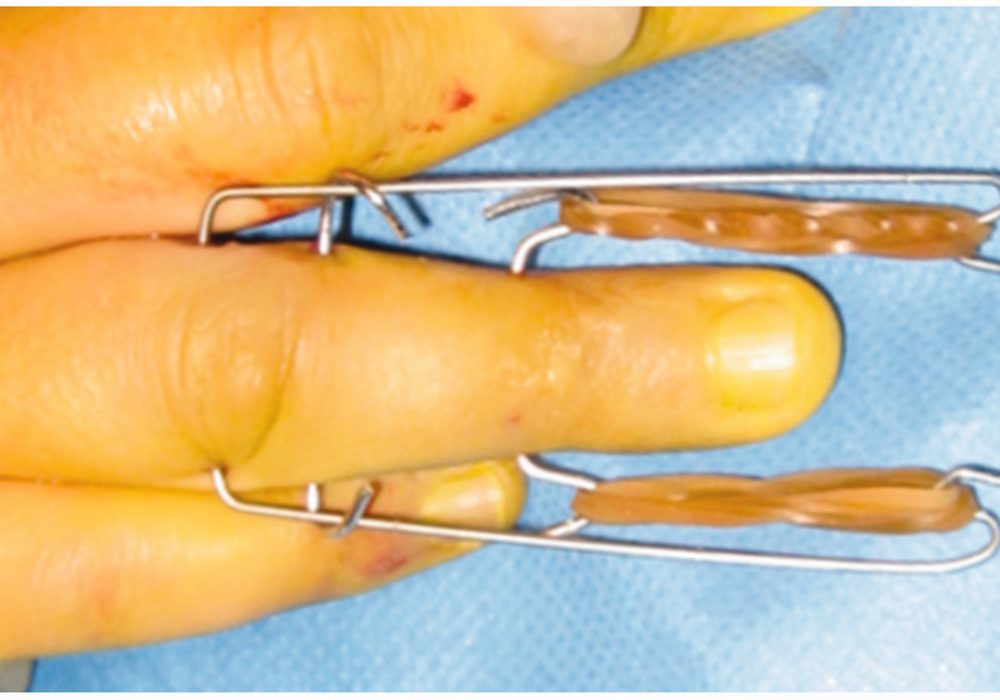
The Suzuki frame, also known as the Suzuki external fixator, is a specialized external fixation device used predominantly for treating complex hand fractures and dislocations, especially those involving the proximal interphalangeal (PIP) joint. It is a dynamic fixator designed to maintain fracture reduction, allow early mobilization, and preserve joint function. This technique combines the principles of traction and external fixation to achieve both stability and mobility, making it particularly valuable in delicate areas such as the fingers, where stiffness and poor healing can severely impair hand function.
The Suzuki frame was introduced in the late 20th century by Yoshio Suzuki and colleagues, who aimed to provide a simple yet effective solution for treating difficult finger injuries. Traditional methods such as plaster immobilization or rigid fixation often resulted in joint stiffness and poor functional recovery. By contrast, the Suzuki frame offered a minimally invasive, dynamic external fixation method that stabilized fractures while permitting controlled movement.
The Suzuki frame is a wire-based dynamic external fixator. Its design typically includes:
The Suzuki frame works on the principle of ligamentotaxis, which means that traction applied across a joint or fracture helps align bone fragments through the tension of surrounding soft tissues and ligaments.
While generally safe, possible complications include:
The Suzuki frame is designed to balance stability and mobility. Studies and clinical experience show that patients treated with this fixator typically regain good joint motion and functional hand use. Rehabilitation focuses on:
Early finger movement to prevent stiffness.
Gradual strengthening once the fracture shows signs of union.
Frame removal after adequate healing, usually within 4–6 weeks.
With proper application and care, most patients achieve excellent pain relief, fracture healing, and near-normal function.
The Suzuki frame (external fixator) is an ingenious, cost-effective, and minimally invasive method for managing complex finger fractures and dislocations. By combining stability with early mobilization, it addresses the dual challenges of fracture healing and functional recovery. Though it requires surgical expertise and careful monitoring, its simplicity, affordability, and excellent functional outcomes make it a valuable tool in hand surgery. For patients with delicate joint injuries, the Suzuki frame often provides the best chance for both bone healing and preservation of motion, ensuring optimal long-term hand function.
Chat With Me