What Is Distal Nerve Transfer?
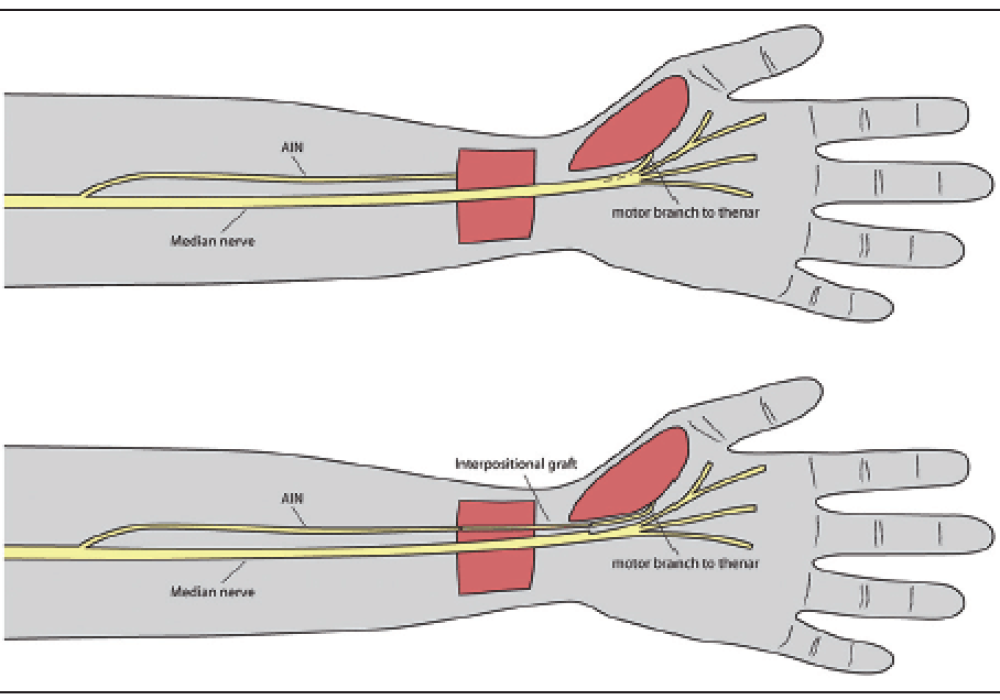
Distal nerve transfer is a microsurgical procedure where a donor nerve with a redundant or less critical function is surgically connected to the distal stump of a damaged nerve to restore motor or sensory function. Unlike nerve grafting, which bridges a gap in the injured nerve, nerve transfer bypasses the damaged segment by rerouting a healthy nerve closer to the target muscle or sensory area.
Indications for Distal Nerve Transfer
Distal nerve transfers are indicated in cases such as:
- High nerve injuries where the distance for nerve regeneration is long, leading to poor outcomes with traditional repair.
- Irreparable nerve injuries with extensive damage or scarring.
- Brachial plexus injuries causing paralysis of the upper limb.
- Facial nerve palsy.
- Peripheral nerve injuries with delayed presentation.
- Failed previous nerve repairs.
Advantages of Distal Nerve Transfer
- Faster Reinnervation: By connecting closer to the target muscle, nerve fibers have a shorter distance to regenerate, leading to quicker functional recovery.
- Improved Outcomes: Higher rates of muscle strength and sensory restoration.
- Avoidance of Scarred or Damaged Nerve Segments: Bypasses areas of severe injury or fibrosis.
- Preservation of Donor Nerve Function: Donor nerves are carefully selected to minimize functional loss.
Common Types of Distal Nerve Transfers
1. Oberlin Transfer
- Used for restoring elbow flexion in upper brachial plexus injuries.
- A fascicle from the ulnar nerve is transferred to the biceps branch of the musculocutaneous nerve.
2. Spinal Accessory to Suprascapular Nerve Transfer
- Restores shoulder abduction and external rotation.
- The spinal accessory nerve is rerouted to the suprascapular nerve.
3. Intercostal Nerve Transfer
- Used in brachial plexus injuries.
- Intercostal nerves are transferred to the musculocutaneous nerve to restore elbow flexion.
4. Distal Median to Ulnar Nerve Transfer
- Used to restore intrinsic hand muscle function.
The Distal Nerve Transfer Procedure
Preoperative Evaluation
- Detailed clinical and neurological examination.
- Electrophysiological studies to assess nerve function.
- Imaging studies such as MRI or ultrasound to evaluate nerve injury.
Surgical Steps
- Anesthesia: General anesthesia is administered.
- Exposure: Incisions are made to expose the donor and recipient nerves.
- Identification: Donor nerve fascicles and recipient nerve branches are identified using nerve stimulators.
- Transection: The donor nerve fascicle is carefully cut.
- Coaptation: The donor nerve is microsurgically sutured to the distal stump of the recipient nerve.
- Closure: The surgical site is closed in layers.
Duration
The procedure typically lasts 2 to 4 hours depending on complexity.
Recovery and Rehabilitation
- Nerve regeneration occurs at approximately 1 to 3 millimeters per day.
- Physical therapy is essential to maintain joint mobility and muscle strength.
- Sensory re-education and motor retraining help optimize functional recovery.
- Recovery time varies but significant improvement is often seen within 6 to 12 months.
Risks and Complications
- Infection
- Donor site weakness or sensory loss
- Neuroma formation
- Incomplete functional recovery
- Scar tissue formation
Prognosis
- Distal nerve transfers generally offer better and faster functional recovery compared to traditional nerve repair, especially in proximal nerve injuries.
- Early surgical intervention and adherence to rehabilitation protocols improve outcomes.
When to See a Doctor
Seek medical evaluation if you experience:
- Persistent weakness or paralysis after nerve injury
- Loss of sensation or motor function
- Symptoms worsening over time
Conclusion
Distal nerve transfer is a cutting-edge surgical technique that provides hope for patients with severe nerve injuries. By rerouting healthy nerves to restore function, this procedure offers faster and more effective recovery than traditional methods. If you or a loved one has suffered a nerve injury with significant functional loss, consult a nerve specialist or orthopedic surgeon to explore whether distal nerve transfer is an appropriate treatment option.