Understanding Elbow Ligaments and Their Function
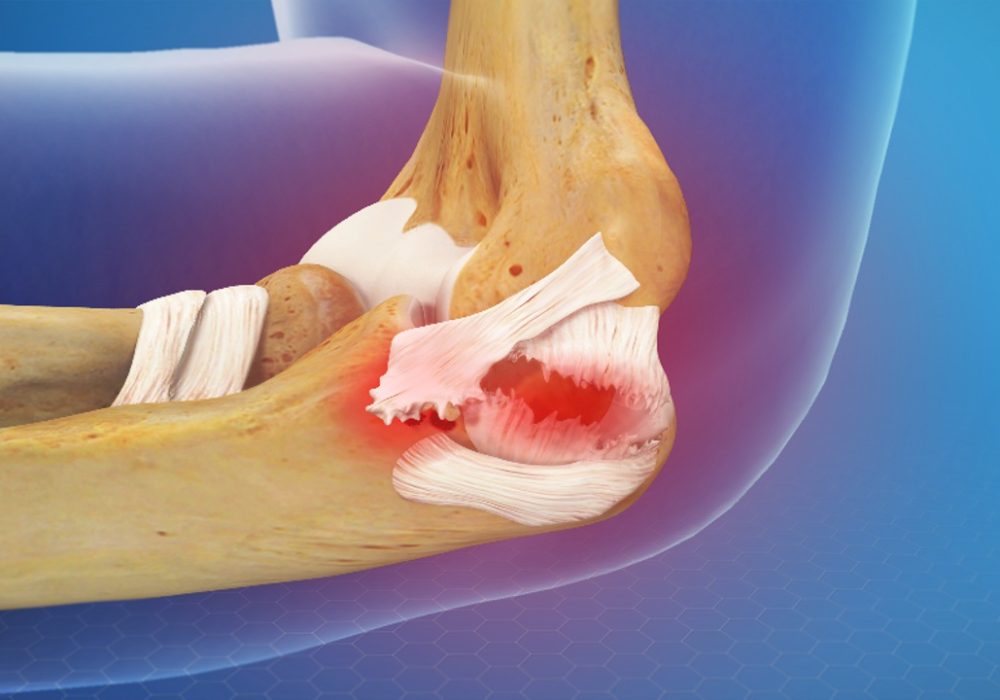
The elbow joint is stabilized primarily by three ligament complexes:
- Medial Collateral Ligament (MCL): Provides valgus stability (prevents the elbow from bending outward).
- Lateral Collateral Ligament (LCL) Complex: Provides varus stability (prevents the elbow from bending inward) and posterolateral rotatory stability.
- Annular Ligament: Encircles the radial head and stabilizes the proximal radioulnar joint.
Injuries to one or more of these ligaments can cause elbow instability, leading to pain, weakness, and limited motion.
Causes of Multi Ligament Elbow Injuries
Multi ligament injuries of the elbow typically result from:
- Trauma: High-energy injuries such as falls on an outstretched hand, motor vehicle accidents, or sports injuries.
- Elbow Dislocations: Often associated with ligament tears.
- Repetitive Stress: Overuse injuries in athletes, especially throwers.
- Iatrogenic Causes: Complications from previous surgeries or fractures.
Symptoms of Multi Ligament Elbow Injury
- Pain and swelling around the elbow
- Feeling of instability or “giving way”
- Decreased range of motion
- Weakness in gripping or lifting
- Numbness or tingling if nerves are involved
Diagnosis
1. Clinical Examination
A thorough physical exam assesses:
- Joint stability through stress tests (valgus and varus stress)
- Range of motion
- Neurovascular status
Excess body weight increases pressure on the plantar fascia, contributing to inflammation.
2. Imaging Studies
- X-rays: To identify fractures or dislocations.
- MRI: Provides detailed images of ligament tears and soft tissue injuries.
- CT Scan: Useful for complex fractures and joint alignment assessment.
Treatment Options
Non-Surgical Management
Mild ligament injuries may be treated conservatively with:
- Rest and immobilization
- Physical therapy
- Anti-inflammatory medications
However, multi ligament injuries causing instability usually require surgical intervention.
Elbow Multi Ligament Reconstruction Surgery
Indications
Surgery is indicated for:
- Persistent instability despite conservative treatment
- Combined ligament injuries with joint dislocation
- Functional impairment affecting daily activities or sports
Surgical Goals
- Restore elbow stability
- Preserve or improve range of motion
- Prevent chronic pain and arthritis
Surgical Techniques
- Anesthesia and Positioning: General or regional anesthesia; patient positioned supine or lateral.
- Surgical Approach: Incisions made to access injured ligaments.
- Ligament Repair or Reconstruction: Depending on tissue quality, ligaments may be repaired or reconstructed using grafts.
- Autografts: Tendons harvested from the patient (e.g., palmaris longus, hamstring).
- Allografts: Donor tissue.
- Fixation: Ligaments are anchored to bone using screws, anchors, or sutures.
- Addressing Associated Injuries: Repair of fractures or nerve decompression if needed.
- Closure: Layered closure of soft tissues.
Postoperative Care
- Immobilization in a splint or brace to protect repairs.
- Pain management with medications.
- Early controlled motion exercises guided by a physical therapist.
Rehabilitation and Recovery
- Phase 1 (0-2 weeks): Immobilization and pain control.
- Phase 2 (2-6 weeks): Gradual passive and active range of motion exercises.
- Phase 3 (6-12 weeks): Strengthening exercises and functional training.
- Phase 4 (3-6 months): Return to sports or heavy activities as tolerated.
Recovery varies but typically takes 4 to 6 months for full functional restoration.
Risks and Complications
- Stiffness and loss of motion
- Infection
- Nerve injury (e.g., ulnar nerve)
- Graft failure or re-injury
- Persistent instability
Prognosis
With appropriate surgical technique and rehabilitation, most patients regain good elbow stability and function. Early intervention and adherence to rehabilitation protocols are critical for optimal outcomes.
When to See a Doctor
Seek medical evaluation if you experience:
- Elbow pain and swelling after trauma
- Sensation of instability or joint “giving way”
- Limited motion or weakness
- Numbness or tingling in the arm or hand
Conclusion
Elbow multi ligament reconstruction is a complex but effective surgical procedure for restoring stability and function in patients with severe ligament injuries. Advances in surgical techniques and rehabilitation have improved outcomes, allowing many patients to return to their daily activities and sports. If you have sustained a significant elbow injury with instability, consult an orthopedic specialist to discuss the best treatment options.